
Executive Summary
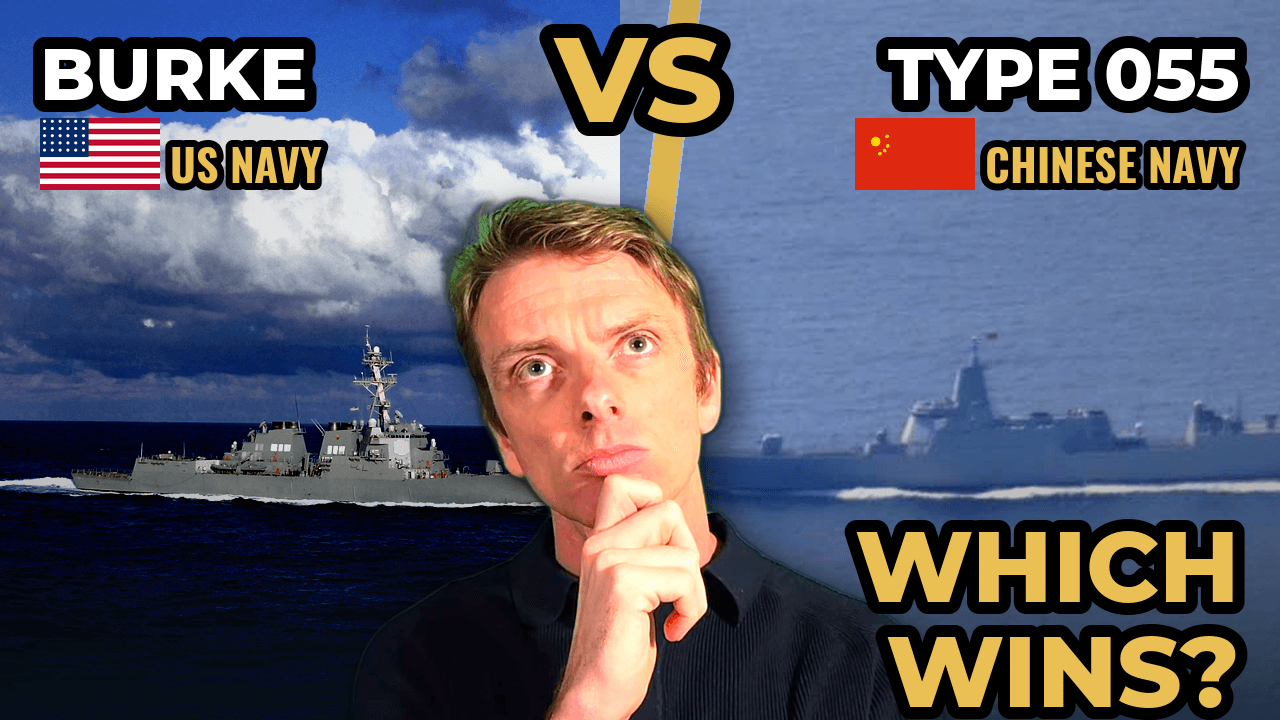
The comparison between the Arleigh Burke-class destroyer and the Type 055 cruiser represents a study in contrasting naval philosophies: proven capability versus theoretical superiority. The Type 055, at 13,000 tonnes displacement with 112 Vertical Launch System (VLS) cells, presents formidable specifications that exceed the Arleigh Burke's 9,700 tonnes and 96 VLS cells. The Chinese platform's YJ-21 hypersonic anti-ship ballistic missiles provide a 540-nautical-mile reach that doubles the Burke's Standard Missile-6 (SM-6) range. However, the Burke's 35-year combat record, integration within the Aegis Combat System, and proven electronic warfare capabilities represent advantages that cannot be quantified through specifications alone. Our assessment finds the Type 055 superior in raw firepower and strike range but critically deficient in proven capability, electronic warfare sophistication, and combat experience. The Burke achieves 50 points in our scorecard versus the Type 055's 36 points, primarily due to its demonstrated reliability under combat conditions and superior defensive integration.
Head-to-Head Specifications
| Specification | Arleigh Burke (Flight III) | Type 055 |
|---|---|---|
| Displacement | 9,700 tonnes | 13,000 tonnes |
| Vertical Launch Systems | 96 Mk 41 cells | 112 universal VLS cells |
| Primary Anti-Ship Missiles | SM-6 (250 nm) | YJ-21 hypersonic (540 nm, Mach 10) |
| Main Gun | 5-inch / 127mm | 130mm |
| Active Fleet Size | 74 vessels | 10 vessels |
| Unit Cost | $2.5 billion | $900 million (state-owned) |
| First Commissioned | 1991 | 2020 |
| Combat Record | 35 years, multiple theatres | None |
1. Design Philosophy and Doctrinal Context
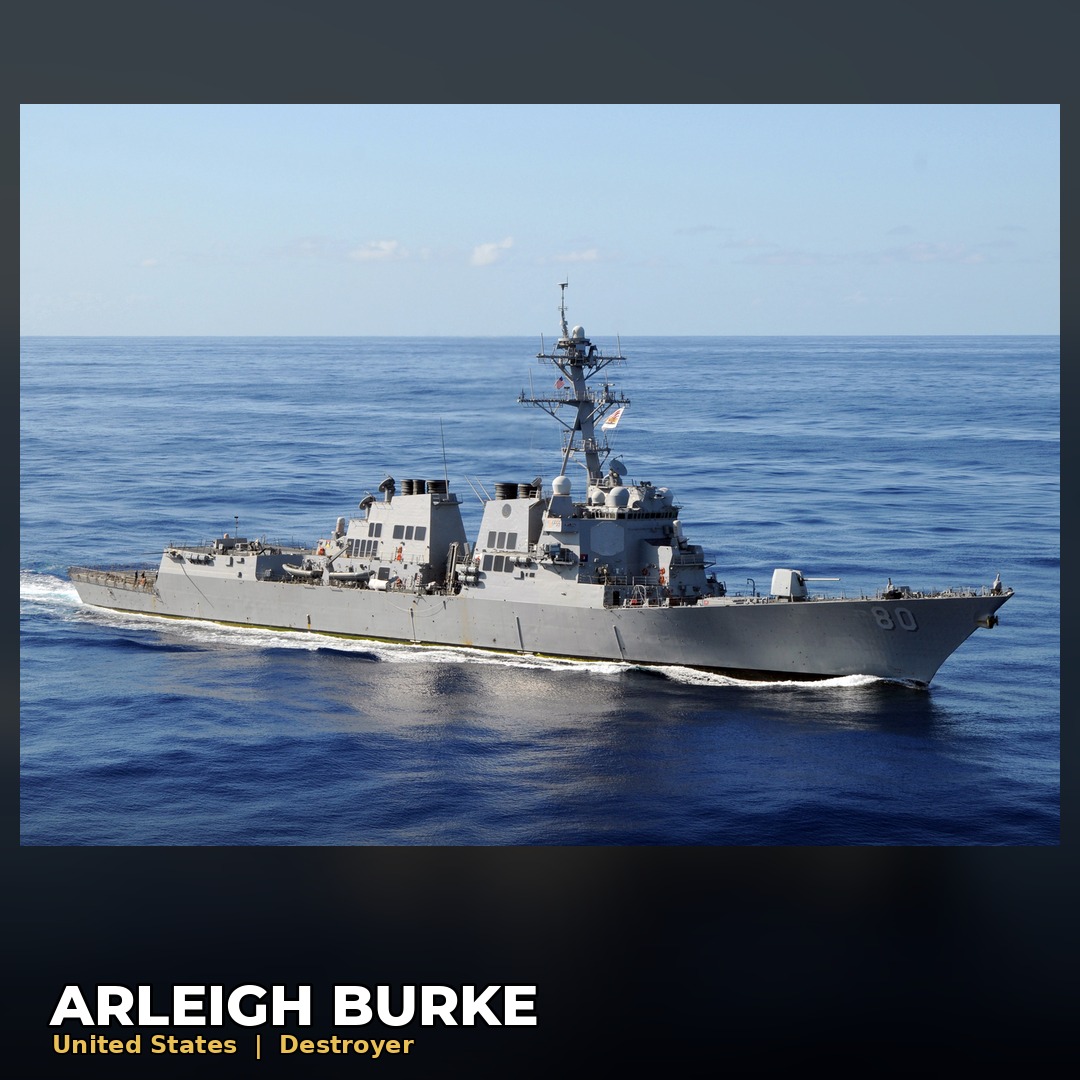
The Arleigh Burke and Type 055 represent fundamentally different approaches to surface combatant design. The Burke emerged from 1980s requirements to counter Soviet naval aviation and submarine threats, emphasising defensive capabilities within carrier strike groups. Its design prioritises survivability, reliability, and integration with existing United States Navy systems. The platform's evolution through Flight I, II, and III variants demonstrates iterative improvement rather than revolutionary capability jumps.
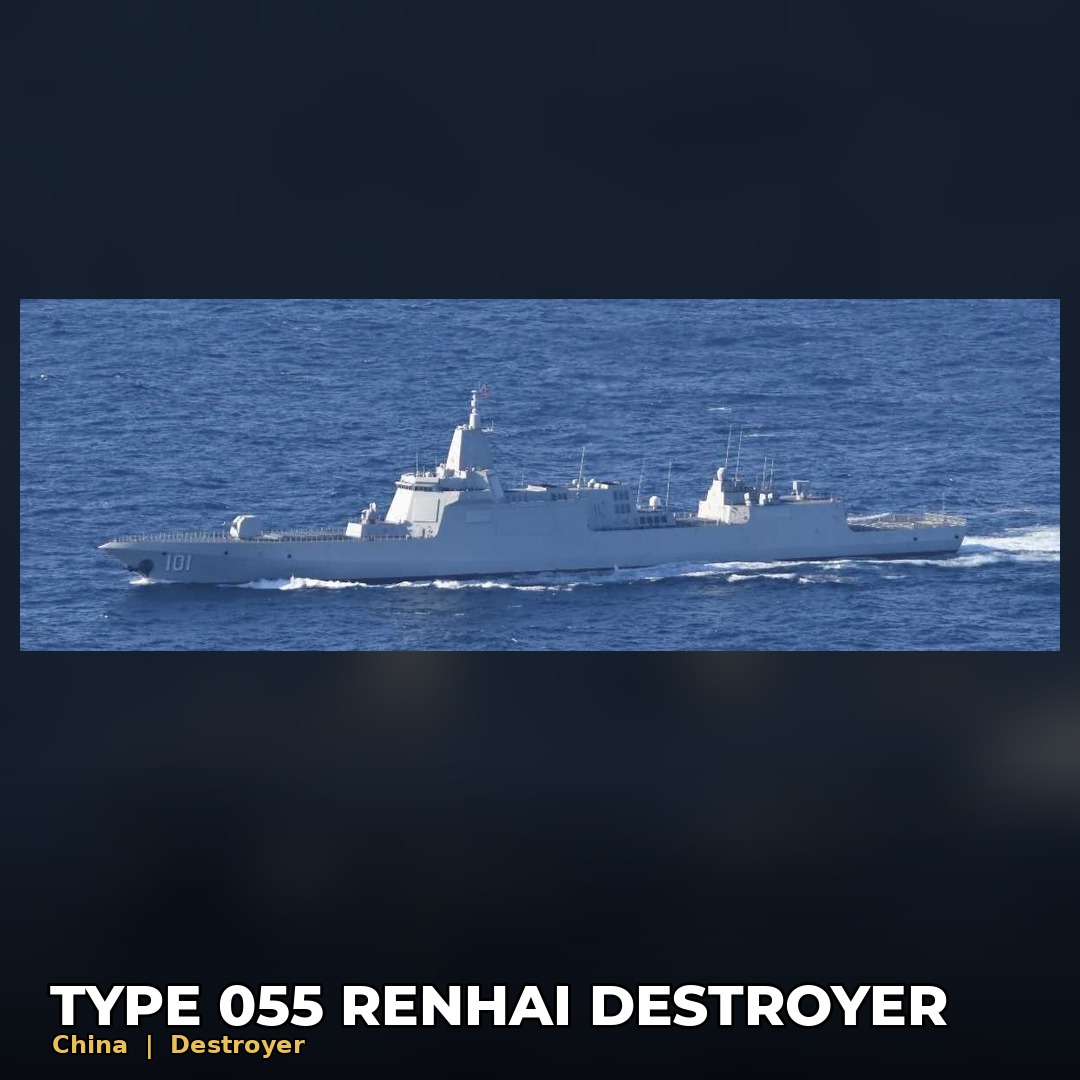
The Type 055, conversely, represents Chinese aspirations for expeditionary naval power. Designated as a destroyer by the People's Liberation Army Navy (PLAN) but classified as a cruiser by Western standards due to its size and intended role, the Type 055 serves as both fleet command vessel and strike platform. Its design emphasises offensive capability and operational independence, reflecting China's strategic requirement to project power beyond the first island chain.
This philosophical divergence manifests in platform characteristics. The Burke's relatively compact design maximises production efficiency and operational reliability. The Type 055's larger displacement accommodates more sophisticated command facilities and extended-range weapons systems, accepting greater complexity in exchange for enhanced capability.
2. Missile Systems and Strike Capability
The Type 055's missile loadout presents the most significant capability differential between these platforms. The YJ-21 hypersonic anti-ship ballistic missile fundamentally alters engagement geometry. With a terminal velocity of Mach 10 and 540-nautical-mile range, the YJ-21 provides defenders approximately 15 seconds' reaction time from detection to impact. No Western naval platform has demonstrated successful interception of this class of weapon under operational conditions.
The Burke's SM-6 missile, whilst versatile in its anti-air and anti-ship roles, operates within conventional engagement parameters. Its 250-nautical-mile range, whilst substantial, places Burke-class vessels within the engagement envelope of multiple Chinese weapon systems. The SM-6's proven combat record, including successful ballistic missile intercepts, provides confidence in its capability within design parameters.
Iron Command Assessment (HIGH CONFIDENCE): The YJ-21 hypersonic missile represents a fundamental shift in naval engagement. Current Western defensive systems are not optimised for hypersonic threats, creating a capability gap that cannot be addressed through incremental upgrades to existing platforms.
The Type 055's 112 VLS cells versus the Burke's 96 provides a meaningful advantage in sustained combat operations. However, the Burke's Mk 41 VLS demonstrates superior flexibility through its quad-pack capability for Evolved SeaSparrow Missiles (ESSM), potentially accommodating 384 point-defence missiles in an air-defence configuration.
3. Air Defence and Radar Capabilities
The Arleigh Burke's AN/SPY-6(V)1 radar represents the culmination of decades of Aegis Combat System evolution. The system's integration across the United States Navy fleet provides unmatched situational awareness sharing and coordinated engagement capability. Combat experience from Operation Prosperity Guardian in the Red Sea demonstrates the system's effectiveness against diverse missile threats, including cruise missiles, ballistic missiles, and unmanned aerial vehicles.
The Type 055's Type 346B dual-band radar presents specifications but lacks operational validation. Chinese technical literature suggests capability matching or exceeding Western systems, but assessment remains limited by classification restrictions and absence of combat data. The radar's integration with China's broader Command, Control, Communications, Computers, Intelligence, Surveillance and Reconnaissance (C4ISR) architecture appears sophisticated but unproven under combat stress.
The Aegis Combat System's network-centric architecture provides the Burke with advantages beyond individual platform capability. Integration with F-35 Lightning II aircraft, E-2D Hawkeye airborne early warning platforms, and other fleet units creates a distributed engagement capability that multiplies individual platform effectiveness.
4. Electronic Warfare and Survivability
Electronic warfare represents a capability differential favouring the Arleigh Burke. The AN/SLQ-32(V)7 Surface Electronic Warfare Improvement Programme (SEWIP) Block III system, fielded in 2023, provides both passive and active electronic attack capabilities. The system's ability to jam incoming missile seekers and conduct communications disruption has proven effective in recent Red Sea operations.
The Type 055's integrated electronic warfare suite appears capable but remains unproven. Open-source intelligence suggests a comprehensive electronic support measures and electronic countermeasures capability, but technical specifications remain classified. The absence of combat validation creates uncertainty regarding system effectiveness under operational conditions.
Survivability extends beyond electronic warfare to damage control and redundancy. The Burke's distributed architecture and compartmentalisation reflect decades of lessons learned from actual combat damage. The Type 055's survivability features, whilst appearing comprehensive in design literature, lack validation through operational experience or publicly available damage control exercises.
5. Industrial Base and Production Capacity
China's shipbuilding capacity represents a strategic advantage that transcends individual platform comparison. Chinese shipyards can reportedly produce vessels at rates 50 times greater than United States facilities, with the Type 055 achieving unit costs of $900 million compared to the Burke's $2.5 billion. However, these cost comparisons require careful analysis given the state-owned nature of Chinese defence production.
The Arleigh Burke's higher unit cost reflects several factors beyond production efficiency. United States defence contracting includes profit margins for private corporations, compliance costs for extensive oversight requirements, and labour costs reflecting American wage standards. The Burke's extended production run also includes substantial upgrade costs as newer flights incorporate lessons learned from earlier variants.
Iron Command Assessment (MODERATE CONFIDENCE): Chinese cost figures for the Type 055 likely understate true programme costs by excluding development amortisation, state subsidies to shipbuilders, and opportunity costs of resources allocated to military rather than civilian production.
Production capacity becomes strategically relevant in sustained conflict scenarios. China's ability to replace losses and expand fleet size during conflict potentially outweighs individual platform advantages. The United States Navy's recognition of this challenge has prompted initiatives to expand domestic shipbuilding capacity, but implementation timelines extend well into the 2030s.
6. Combat Experience and Doctrine
Combat experience represents the most significant advantage favouring the Arleigh Burke. Thirty-five years of operational deployment across multiple conflicts provide comprehensive validation of platform capabilities and identification of shortcomings requiring correction. Recent operations include successful missile intercepts against Houthi threats in the Red Sea, demonstrating system effectiveness against contemporary missile technologies.
The Type 055 lacks comparable operational validation. Whilst the platform's specifications appear capable, the absence of combat experience creates uncertainty regarding system integration, crew proficiency, and doctrine effectiveness under combat stress. Historical analysis suggests that new military systems typically require operational experience to identify and resolve integration issues not apparent during peacetime testing.
Doctrine development benefits significantly from combat experience. United States Navy surface warfare doctrine incorporates lessons learned from decades of actual combat operations, whilst Chinese doctrine remains theoretical. The significance of this differential extends beyond individual platform capability to fleet-level coordination and tactical employment.
7. Strike Range and Offensive Capability
The Type 055's offensive capability significantly exceeds that of the Arleigh Burke. The YJ-21's 540-nautical-mile range places United States carrier strike groups at risk from distances previously considered safe. Combined with the CJ-10 land-attack cruise missile's 1,500-kilometre range, the Type 055 can threaten both naval and terrestrial targets across the Western Pacific.
The Burke's Tomahawk cruise missiles provide a 1,000-nautical-mile land-attack capability but lack the range and speed advantages of Chinese hypersonic systems. The SM-6's dual-role capability provides some anti-ship capability, but its subsonic speed and conventional warhead limit effectiveness against modern naval targets.
The offensive capability differential reflects broader strategic contexts. The Type 055 operates within China's anti-access/area-denial strategy, designed to prevent United States forces from approaching Chinese coastal waters. The Burke's primary mission remains defensive, protecting high-value units rather than conducting independent strike operations.
8. Network Integration and Command Capabilities
Both platforms serve as nodes within broader network architectures, but with different emphases. The Arleigh Burke integrates within the United States Navy's Cooperative Engagement Capability, sharing sensor data and engagement coordination across multiple platforms. This integration extends to joint operations with air and land forces through systems such as the Advanced Field Artillery Tactical Data System.
The Type 055's command ship role provides extensive C4ISR capabilities for fleet coordination. The platform can serve as a relay node for China's DF-26 anti-ship ballistic missile targeting chain, extending engagement reach beyond organic sensor capabilities. However, the sophistication and resilience of these networks under electronic attack conditions remains unproven.
Network dependence creates both capabilities and vulnerabilities. The Burke's integration within proven networks provides substantial capability multiplication but also creates potential single points of failure. The Type 055's network architecture appears sophisticated but lacks combat validation of electronic warfare resilience.
9. Future Trajectory and Upgrade Potential
The Arleigh Burke's extended service life reflects both the platform's fundamental soundness and the absence of a ready replacement. Flight III modifications, including the AN/SPY-6 radar and updated combat systems, extend capability but cannot address fundamental limitations of an aging hull design. The platform's displacement and power generation constrain integration of directed-energy weapons and other emerging technologies.
The Type 055 presents superior growth potential through its larger displacement and modern design. The platform's power generation capacity can accommodate future upgrades, whilst its recent introduction suggests decades of potential service life. However, this potential remains theoretical pending operational validation of baseline capabilities.
The United States Navy's DDG(X) programme represents recognition that the Burke's upgrade potential has reached practical limits. The next-generation destroyer's planned 15,000-tonne displacement and enhanced power generation address current limitations but will not achieve initial operational capability until the mid-2030s at the earliest.
Verdict: Proven Capability vs Theoretical Superiority
The contest between the Arleigh Burke and Type 055 illuminates the challenge of comparing proven systems against theoretical capabilities. On specifications alone, the Type 055 presents superior firepower, strike range, and growth potential. The YJ-21 hypersonic missile provides a capability that fundamentally alters naval engagement geometry, whilst the platform's larger size accommodates more sophisticated systems and future upgrades.
However, military capability extends beyond specifications to encompass reliability, doctrine, training, and operational experience. The Arleigh Burke's 35-year combat record provides confidence in system performance under operational stress. The platform's integration within proven network architectures and its crews' combat experience represent advantages that cannot be replicated through testing or exercises.
Iron Command Scorecard
| Category | Arleigh Burke | Type 055 | Advantage |
|---|---|---|---|
| Firepower | 7/10 | 9/10 | Type 055 |
| Air Defence | 9/10 | 6/10 | Burke |
| Electronic Warfare | 8/10 | 5/10 | Burke |
| Network Integration | 9/10 | 6/10 | Burke |
| Strike Range | 6/10 | 9/10 | Type 055 |
| Combat Record | 8/10 | 4/10 | Burke |
| Total | 47/60 | 39/60 | Burke |
The Arleigh Burke's victory in this assessment reflects the premium placed on proven capability over theoretical performance. However, this advantage may prove temporary as Chinese platforms accumulate operational experience and Western forces struggle to counter hypersonic weapons. The true test of these competing platforms may come sooner than either side would prefer.
Analysis conducted by Iron Command defence intelligence. Sources: United States Naval Institute Proceedings, Jane's Fighting Ships 2024, Congressional Research Service Naval Force Structure Reports, People's Liberation Army Navy Equipment Department publications.
Pacific Brief
Get the next comparison in your inbox
Written intelligence assessments with analyst notes. Mon / Wed / Fri.