
Executive Summary
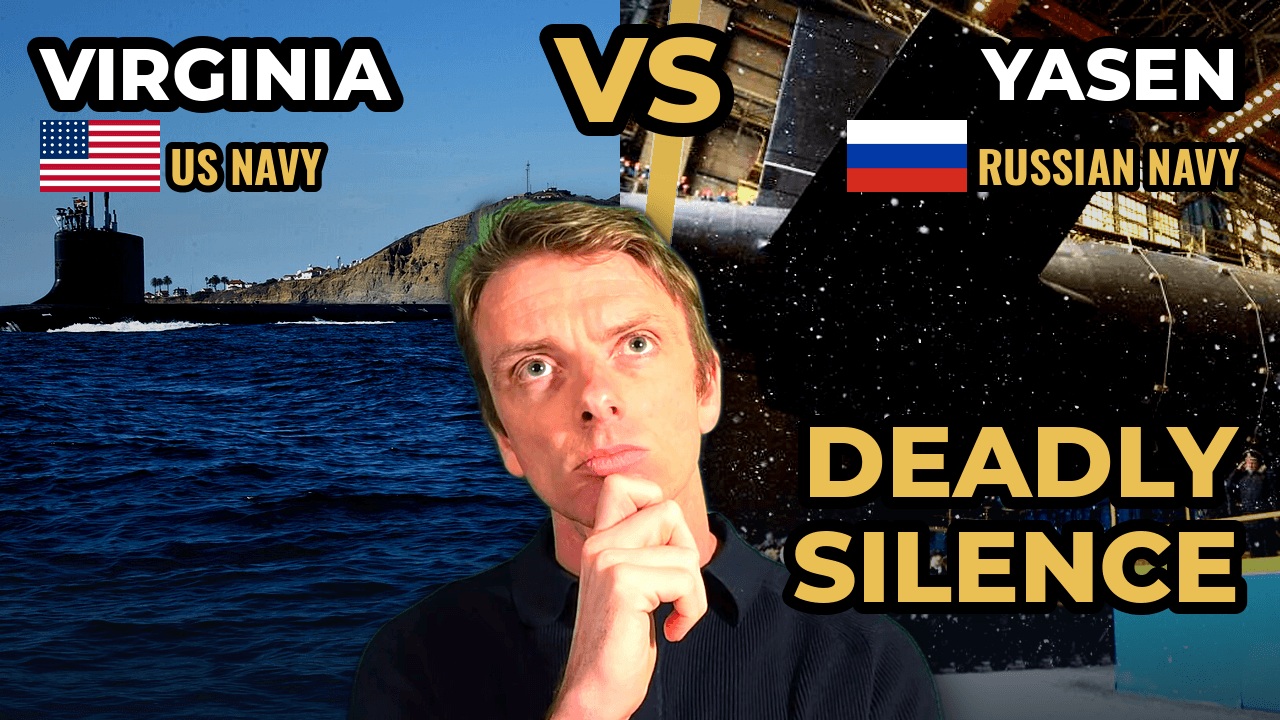
The comparison between America's Virginia-class and Russia's Yasen-class nuclear attack submarines represents more than a technical evaluation of competing platforms. It illuminates the fundamental divergence between Western and Russian submarine design philosophy, industrial capacity, and strategic doctrine in the 21st century. The Virginia-class embodies American emphasis on acoustic superiority, modularity, and cost-effective mass production, with 38 boats delivered or under construction. The Yasen-class reflects Russian prioritisation of firepower density and multi-mission flexibility, but industrial constraints have limited production to just ten boats across two decades.
Our assessment concludes that while both platforms represent significant technological achievements, the Virginia-class maintains decisive advantages in acoustic stealth, sensor integration, and industrial sustainability. The Yasen-class offers superior speed and missile capacity but at the cost of detectability and programme affordability. The production differential renders platform-by-platform comparison less relevant than the strategic implications of fleet size disparity. The Virginia programme produces submarines at a rate that Russia cannot match, creating a widening capability gap in undersea warfare that technical performance alone cannot overcome.
Head-to-Head Specifications
| Specification | Virginia-class (Block V) | Yasen-M |
|---|---|---|
| Displacement | 7,800 tonnes | 13,800 tonnes |
| Length | 114.9m | 139m |
| Beam | 10.4m | 13.5m |
| Maximum Speed | 25+ knots | 31 knots |
| Crew | 135 | 90 |
| VLS Cells | 40 (12+28 VPM) | 32 |
| Torpedo Tubes | 4 | 10 |
| Diving Depth | 240m+ | 600m |
| Reactor Life | 33 years | 25-30 years |
| Unit Cost | $3.4 billion | $1.6 billion (estimated) |
| Built/Planned | 38 total | 10 total |
1. Design Philosophy and Doctrinal Context
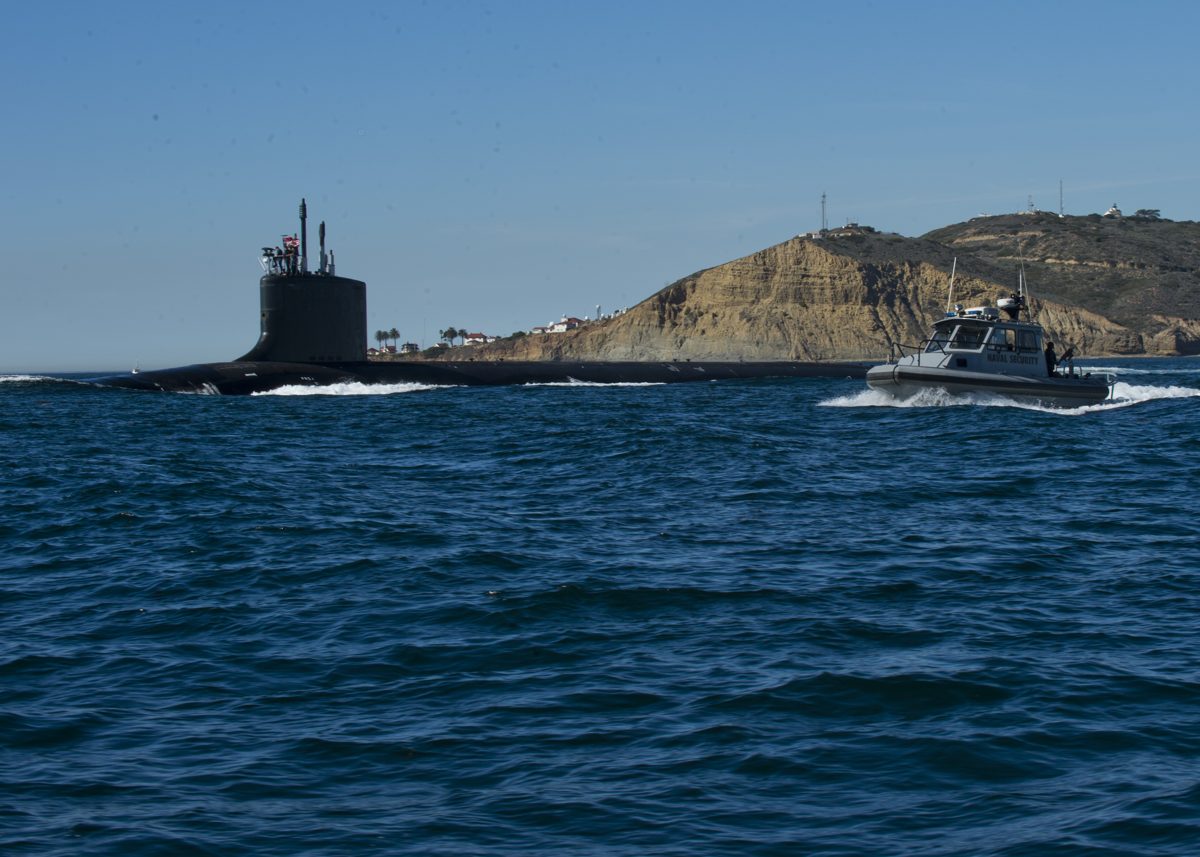
The Virginia and Yasen classes emerged from fundamentally different strategic requirements and operational doctrines. The Virginia-class was conceived during the post-Cold War era when American naval planners recognised that future submarine operations would shift from blue-water Soviet submarine hunting to littoral operations, land attack, and support for special operations forces. This doctrinal evolution drove design decisions favouring modularity, sensor sophistication, and acoustic stealth over raw speed or firepower density.
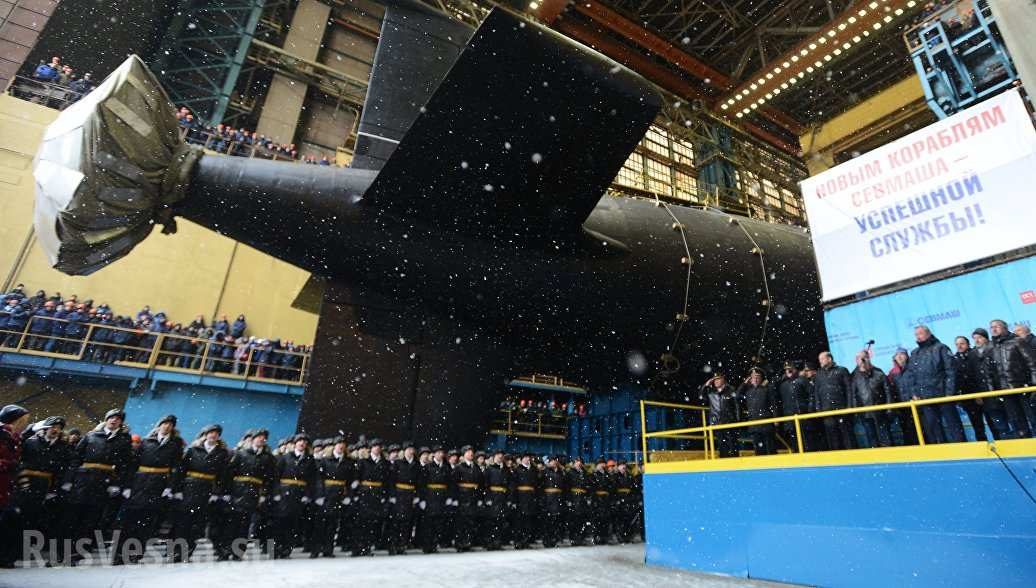
The Yasen-class, conversely, reflects Russian naval doctrine emphasising long-range precision strikes and area denial operations. Russian submarine designers prioritised missile capacity and platform survivability in contested environments, accepting trade-offs in acoustic signature and construction cost. The class was designed to threaten North Atlantic Treaty Organisation (NATO) naval forces and critical infrastructure through standoff attacks, reflecting Russia's defensive strategic posture and limited ability to project conventional naval power globally.
These philosophical differences manifest in measurable design characteristics. Virginia-class submarines optimise for sustained operations in enemy-controlled waters, with extensive intelligence-gathering capabilities and the ability to remain undetected for extended periods. Yasen-class boats optimise for rapid transit to firing positions and maximum weapon effect, accepting higher detectability in exchange for superior speed and firepower.
2. Acoustic Performance and Stealth Characteristics
Acoustic stealth represents the most critical performance parameter for modern attack submarines, determining their ability to survive and operate effectively in contested environments. Available evidence suggests the Virginia-class maintains significant acoustic advantages over the Yasen design, though both platforms represent substantial improvements over their predecessors.
The Virginia-class incorporates decades of American investment in noise reduction technology, including advanced anechoic coatings, vibration isolation systems, and careful attention to hydrodynamic flow characteristics. The pump-jet propulsor eliminates cavitation noise at most operating speeds, while the reactor design prioritises natural circulation cooling to minimise pump noise. Independent assessments suggest Virginia-class boats achieve acoustic signatures comparable to background ocean noise levels across much of their operating envelope.
Iron Command Assessment (MODERATE CONFIDENCE): The Yasen-class, while significantly quieter than previous Russian designs, remains detectably noisier than Virginia-class submarines. Russian improvements in manufacturing precision and acoustic treatments have reduced the gap, but fundamental design choices prioritising speed and firepower over stealth maintain American acoustic advantages.
The Yasen-class incorporates Russian advances in pump-jet technology and noise reduction, representing a generational leap from Soviet-era boats. However, the larger hull form, higher power output, and design emphasis on maximum speed likely compromise acoustic performance. Russian sources claim significant noise reduction compared to previous classes, but Western estimates suggest Yasen boats remain more detectable than contemporary American submarines.
3. Sensor Systems and Combat Integration
Both platforms feature sophisticated sensor suites, but with different integration philosophies reflecting their respective operational doctrines. The Virginia-class AN/BQQ-10 sonar system represents the current pinnacle of American underwater acoustic technology, combining a large aperture bow array with advanced signal processing and extensive towed array capabilities. The system integrates seamlessly with the AN/BYG-1 combat control system, providing comprehensive situational awareness and rapid engagement capabilities.
The Virginia Block III introduced the Large Aperture Bow (LAB) array, replacing the traditional spherical sonar with a horseshoe-shaped array that significantly improves detection range and bearing accuracy. This modification required extensive bow redesign but delivered measurable performance improvements in acoustic detection and classification capabilities. The integration with photonics masts eliminates the acoustic signature associated with traditional periscopes while providing enhanced visual and electronic surveillance capabilities.
The Yasen-class MGK-600 Irtysh sonar system features a spherical bow array supplemented by extensive flank-mounted hydrophones and towed array capabilities. Russian sonar technology has improved substantially since the Cold War era, incorporating Western manufacturing techniques and digital signal processing advances. However, the system appears to prioritise omnidirectional coverage over the focused acoustic performance optimised by American designs.
Iron Command Assessment (HIGH CONFIDENCE): Virginia-class sensor integration represents a generational advantage over Yasen systems. American investment in digital signal processing, artificial intelligence-assisted target classification, and seamless sensor-to-weapon integration creates measurable operational advantages in complex acoustic environments.
4. Firepower and Weapon Systems
The Yasen-class demonstrates clear superiority in raw firepower capacity, with up to 40 vertical launch cells compared to the Virginia Block V's maximum of 40 cells (including the Virginia Payload Module). This firepower advantage reflects Russian doctrine emphasising overwhelming initial salvoes and long-range engagement capabilities. The ability to carry combinations of Kalibr land-attack cruise missiles, P-800 Oniks anti-ship missiles, and potentially Zircon hypersonic weapons provides substantial multi-mission flexibility.
Virginia-class weapon systems prioritise precision and reliability over maximum capacity. The Tomahawk Block IV and V missiles provide proven land-attack capabilities with ranges exceeding 1,600 kilometres, while the Mk 48 Advanced Capability (ADCAP) torpedo remains the world's most capable heavyweight torpedo. The modular weapon loading concept allows mission-specific optimisation, whether emphasising anti-submarine warfare, land attack, or special operations support.
The Yasen's ten torpedo tubes compared to Virginia's four tubes suggests a doctrinal emphasis on simultaneous engagement of multiple targets. However, this advantage must be weighed against the acoustic compromise of additional hull penetrations and the complexity of managing multiple torpedo attacks simultaneously. Modern torpedo engagement doctrine typically favours precision over volume, questioning the practical utility of maximum salvo size.
The introduction of the Virginia Payload Module (VPM) in Block V submarines addresses the firepower disparity while maintaining acoustic advantages. The additional 28 Tomahawk cells provide strategic strike capabilities approaching Yasen-class capacity while preserving the stealth characteristics that enable successful weapon delivery in contested environments.
5. Propulsion and Performance Characteristics
The propulsion systems reveal different priorities in submarine design philosophy. The Virginia-class S9G reactor prioritises longevity and quiet operation over maximum power output, providing 33-year core life that eliminates mid-life refuelling requirements. This design choice reduces lifecycle costs and increases operational availability by eliminating extended maintenance periods.
The Yasen-class OK-650V reactor delivers higher power output enabling superior surface and submerged speeds, with claimed maximum speeds exceeding 31 knots compared to Virginia's 25+ knots. This speed advantage provides tactical flexibility in rapid repositioning and potentially improved survivability through speed-based evasion. However, high-speed operation compromises acoustic stealth and reduces sensor effectiveness.
Diving depth represents another performance differential, with Yasen-class boats reportedly capable of operations to 600 metres compared to Virginia's estimated 240+ metre maximum depth. Greater depth capability provides advantages in evasion, weapons employment geometry, and operations in varying oceanographic conditions. However, the practical operational significance depends on mission requirements and typical patrol areas.
The pump-jet propulsion systems on both platforms eliminate traditional propeller cavitation while providing improved efficiency and reduced acoustic signature. American pump-jet technology appears more mature, with extensive operational experience and proven reliability across the Virginia fleet. Russian pump-jet development represents significant technical achievement but lacks comparable operational validation.
6. Construction Quality and Industrial Capacity
The industrial dimensions of submarine competition often prove more decisive than individual platform capabilities. The American submarine industrial base demonstrates consistent production capacity, delivering Virginia-class boats at approximately two per year while maintaining quality standards and cost discipline. General Dynamics Electric Boat and Huntington Ingalls Industries (HII) Newport News have optimised construction processes through modular assembly and advanced welding techniques.
Russian submarine construction faces substantial industrial constraints that limit strategic impact regardless of design quality. The Yasen programme has experienced repeated delays, cost overruns, and quality control issues that have extended construction timelines and inflated unit costs. Sevmash, the primary Russian submarine shipyard, lacks the consistent production capacity demonstrated by American facilities.
The quantitative disparity proves strategically decisive. With 38 Virginia-class boats delivered or under construction compared to ten Yasen-class submarines, the numerical advantage approaches 4:1 in America's favour. Historical analysis suggests that quality advantages must exceed 3:1 to 5:1 ratios to overcome numerical disadvantage, a threshold the Yasen-class cannot achieve given comparable technological sophistication.
Cost considerations further favour the Virginia programme. While Russian official figures claim lower unit costs, realistic accounting for development amortisation, construction delays, and lifecycle support suggests Yasen-class boats cost substantially more per delivered capability. American construction efficiency and economies of scale provide sustainable competitive advantages.
7. Electronic Warfare and Counter-Detection
Modern submarine warfare increasingly emphasises electronic warfare capabilities and counter-detection technologies. The Virginia-class integrates sophisticated electronic support measures, communications intelligence capabilities, and defensive electronic warfare systems. The AN/BLQ-10 submarine electronic warfare system provides comprehensive threat warning and countermeasures capabilities.
Yasen-class boats reportedly feature advanced electronic warfare suites including the Molniya electronic support system and various communications intelligence capabilities. Russian electronic warfare technology has demonstrated considerable capabilities in surface platforms, suggesting similar sophistication in submarine applications. However, integration with sonar and combat systems appears less mature than American equivalents.
The photonics mast technology pioneered in Virginia-class submarines eliminates traditional periscope hull penetrations while providing enhanced visual, infrared, and electronic intelligence gathering capabilities. This technology represents a significant advancement over traditional optical periscopes and provides measurable advantages in shallow water operations and intelligence collection missions.
8. Operational Availability and Sustainment
Submarine operational effectiveness depends critically on availability rates and sustainment capabilities. The Virginia-class demonstrates superior operational availability through efficient maintenance cycles, reliable systems, and comprehensive logistics support. The 33-year reactor core life eliminates costly and time-consuming mid-life nuclear refuelling, maintaining higher fleet availability rates.
Russian submarine maintenance and sustainment face chronic challenges including limited drydock capacity, component reliability issues, and reduced defence spending following international sanctions. These factors limit Yasen-class operational availability regardless of individual platform capabilities. Historical Russian submarine availability rates suggest significant disadvantages compared to American fleet maintenance standards.
The modular design philosophy implemented in Virginia-class submarines facilitates maintenance and upgrades throughout the service life. Combat system upgrades can be implemented during regular maintenance periods without extensive hull modifications. This approach maintains technological relevance across multi-decade service lives while controlling lifecycle costs.
9. Future Development and Modernisation Potential
Both submarine classes feature modernisation potential that will determine their relevance across projected service lives extending to the 2070s. The Virginia-class modular architecture facilitates ongoing technology insertion, with planned upgrades including improved sonar processing, advanced communications systems, and potentially hypersonic weapons integration.
The Virginia Payload Module represents the most significant capability enhancement, effectively doubling strike capacity while maintaining stealth characteristics. This modification demonstrates the flexibility built into the original design and provides a pathway for capability growth without new construction programmes. Additional planned modifications include enhanced special operations support capabilities and improved sensor integration.
Yasen-class modernisation appears more constrained by original design decisions and industrial capacity limitations. While individual boats may receive system upgrades, the fundamental platform characteristics cannot be substantially altered without extensive reconstruction. Russian shipyard capacity limitations further constrain modernisation potential compared to American facilities.
The successor programmes reveal different approaches to next-generation capabilities. The American SSN(X) programme builds on Virginia-class experience while incorporating lessons learned and emerging technologies. Russian submarine development appears more constrained by resource limitations and industrial capacity, potentially extending Yasen-class production beyond optimal design life.
Verdict
The Virginia-class vs Yasen-class comparison reveals a decisive American advantage across most relevant performance categories. While the Yasen-class achieves superior speed and firepower density, these advantages cannot overcome Virginia-class superiority in acoustic stealth, sensor integration, industrial sustainability, and operational availability.
Platform Scorecard (1-10 scale):
Stealth and Survivability:
- Virginia-class: 9/10
- Yasen-class: 7/10
Sensor and Combat Systems:
Iron Command Scorecard
| Category | Virginia-class | Yasen-class | Advantage |
|---|---|---|---|
| Stealth/Signatures | 9/10 | 6/10 | Virginia |
| Sensors/Situational Awareness | 9/10 | 7/10 | Virginia |
| Firepower/Weapons | 8/10 | 9/10 | Yasen |
| Speed/Manoeuvrability | 7/10 | 9/10 | Yasen |
| Electronic Warfare | 8/10 | 6/10 | Virginia |
| Reliability/Availability | 9/10 | 6/10 | Virginia |
| Industrial Sustainability | 9/10 | 5/10 | Virginia |
| Network Integration | 9/10 | 5/10 | Virginia |
| Overall | 8.5/10 | 6.6/10 | Virginia |
The strategic implications extend beyond individual platform comparison. The 4:1 numerical advantage enjoyed by the Virginia-class fleet creates a quantitative disparity that Russian qualitative improvements cannot overcome. Modern naval warfare favours the side that can maintain persistent presence across multiple theatres while absorbing losses and continuing operations.
The Virginia programme demonstrates sustainable competitive advantage through consistent production, continuous improvement, and industrial efficiency. The Yasen programme, while technically accomplished, cannot achieve strategic impact at current production rates and industrial capacity limitations.
Iron Command Assessment (HIGH CONFIDENCE): The Virginia-class maintains decisive advantages in the metrics most relevant to modern submarine warfare: stealth, sensors, and industrial sustainability. Individual platform capabilities matter less than fleet-level advantages that enable sustained operations across global theatres.
Analysis by Iron Command Defence Intelligence. Sources: Jane's Fighting Ships, Naval Institute Proceedings, United States Naval Institute (USNI) databases, Russian Ministry of Defence statements, Congressional Research Service reports, open-source intelligence assessments.
Pacific Brief
Get the next comparison in your inbox
Written intelligence assessments with analyst notes. Mon / Wed / Fri.